

What is Sarcomas ?

Sarcomas are a rare and diverse group of malignant tumors that originate in the body's connective and supportive tissues. Unlike the more common carcinomas, which arise from epithelial cells lining organs, sarcomas develop from mesodermal tissues such as bone, muscle, fat, cartilage, nerves, and blood vessels. They are broadly categorized into two main groups: bone sarcomas (e.g., osteosarcoma, Ewing sarcoma) and soft tissue sarcomas (e.g., liposarcoma, leiomyosarcoma), with over 70 recognized subtypes. Sarcomas can occur anywhere in the body but are most frequently found in the arms, legs, and trunk.
Book Appointment

What is Sarcomas ?

Sarcomas are a rare and diverse group of malignant tumors that originate in the body's connective and supportive tissues. Unlike the more common carcinomas, which arise from epithelial cells lining organs, sarcomas develop from mesodermal tissues such as bone, muscle, fat, cartilage, nerves, and blood vessels. They are broadly categorized into two main groups: bone sarcomas (e.g., osteosarcoma, Ewing sarcoma) and soft tissue sarcomas (e.g., liposarcoma, leiomyosarcoma), with over 70 recognized subtypes. Sarcomas can occur anywhere in the body but are most frequently found in the arms, legs, and trunk.
Book Appointment

When should you need Sarcomas Treatment ?

  • For Soft Tissue Sarcomas (in muscle, fat, nerves, etc.): A Noticeable Lump, Pain.
  • For Bone Sarcomas: Bone Pain, Swelling or a Lump, Unexplained Fractures.
Book Appointment

What is the diagnostic process for Sarcomas ?

  • The diagnostic process for sarcomas begins with a physical exam for a soft tissue lump or evaluation of bone pain. Key steps include:
  • Imaging: The primary tool is an MRI for soft tissue sarcomas or an X-ray and MRI/CT for bone sarcomas. These scans detail the tumor's size, depth, and relationship to nearby structures. A CT scan of the chest is also used to check for lung metastasis.
  • Biopsy: This is essential for a definitive diagnosis. A core needle biopsy, or sometimes a surgical incisional biopsy, is performed to obtain a tissue sample.
  • A pathologist then analyzes the biopsy to determine the sarcoma's specific type and grade, which guides all treatment decisions.
Book Appointment

How should we treat Sarcomas ?

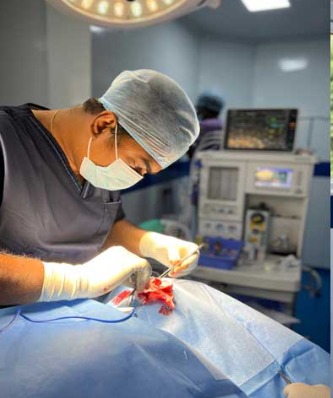
Surgery

Radiation Therapy
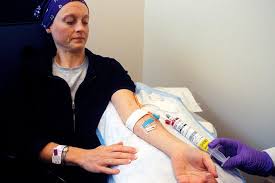
Chemotherapy
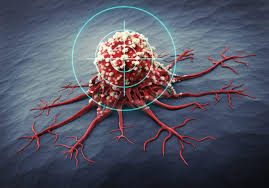
Targeted Therapy & Immunotherapy

Why with us ?

Choose Privaram for sarcoma care, where our specialized oncologists utilize advanced treatments and limb-preserving surgeries. We combine cutting-edge medicine with compassionate, personalized care—focusing on your complete well-being in a supportive, state-of-the-art environment dedicated to your best possible outcome.